
As Acuity Audiovisual customers are upgrading and installing new AV Systems, direct view LED is becoming a more popular choice. Often abbreviated as DVLED, it is no longer a niche product reserved for stadiums, broadcast sets, or premium lobbies. It is quickly becoming a practical choice for conference rooms, auditoriums, training environments, houses of worship, and event venues where visual clarity, reliability, and presence matter.
What Is Direct View LED?
At its simplest, a direct view LED display is a screen made from individual light-emitting diodes that create the image directly.
Unlike an LCD panel, which uses a backlight behind liquid crystal layers, or a projector, which throws light onto a surface, DVLED pixels are the light source. Thousands—or millions—of tiny red, green, and blue LEDs work together to produce brightness, color, contrast, and motion on a modular display surface.
Pixel pitch is the specification that most technical managers should understand first. Pixel pitch is the distance between the centers of adjacent LED pixels, measured in millimeters. A smaller pitch generally supports closer viewing distances and sharper images; a larger pitch can be appropriate for venues where viewers sit farther away. The right DVLED solution is not automatically the smallest pixel pitch available—it is the one matched to room size, content type, viewing distance, budget, and service expectations.

What Makes DVLED Different?
The most obvious difference is the seamless image in video wall deployments. Traditional multi-panel, LCD video walls are built from multiple large panels, which means bezel lines can interrupt dashboards, camera feeds, presentation content, or branded visuals. Although DVLED cabinets are also modular, there is no bezel so the finished canvas appears continuous. For rooms where the display is the focal point, that uninterrupted image changes the experience from “screen on a wall” to “visual platform.”
DVLED systems are modular. Instead of being limited to one fixed screen size, they are built from cabinets or tiles that fit together to create a larger LED video wall canvas. This makes it possible to design custom LED displays in ultra-wide formats, standard presentation ratios, or even creative architectural shapes. Most importantly, DVLED creates a seamless video wall image without the bezel lines often seen in tiled LCD video walls.
Brightness is another key differentiator. DVLED displays can perform well in spaces with ambient light, including modern boardrooms with glass walls, auditoriums with stage lighting, and multipurpose venues that cannot always be darkened.
DVLED displays are designed for long operating life, and many systems are built for front serviceability, meaning components can be accessed and maintained without dismantling the entire wall. There are no projector lamps to replace, no filters to clean, screen motors to replace, and no bezel grid interrupting critical content. As DVLED pricing continues to drop, the brightness and image quality advantage, along with reliability, serviceability and significantly longer life span, are decision factors causing our customers to choose DVLED over projection.
Why DVLED Is Growing in Conference Rooms
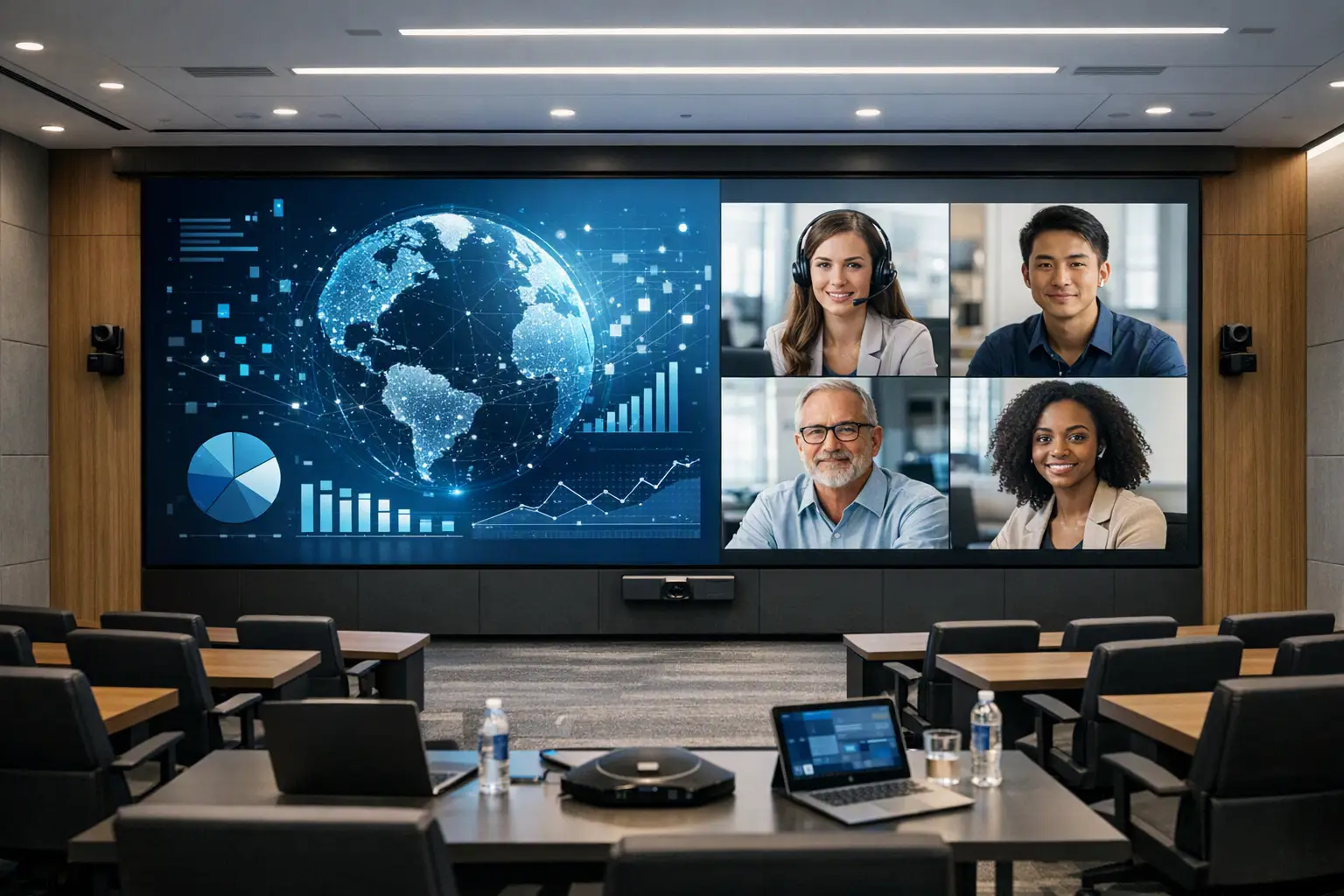
Conference rooms have changed. They are no longer just places for slide decks. They now support hybrid meetings, video collaboration, executive briefings, live data, digital whiteboarding, and high-stakes decision-making. In that environment, display size and quality directly affects communication quality.
DVLED helps because it offers a larger format display without seams, high brightness without projection washout, and a premium look that aligns with modern workplace design. Large-format DVLED walls can make remote participants easier to see, allow multiple content windows to be displayed at once, and support room layouts where the display must be visible from wide angles. As manufacturing improves and prices continue to normalize, DVLED is moving from flagship boardrooms into more everyday collaboration spaces.
Why Auditoriums and Venues Are Adopting DVLED
Auditoriums and venues introduce a different set of requirements: larger audiences, varied sightlines, lighting changes, event turnover, and mixed content. A display may need to support keynote presentations in the morning, live camera feeds in the afternoon, and branded event graphics in the evening. DVLED’s modular architecture makes it well suited for these demands because the wall can be sized and shaped around the room rather than forcing the room to fit a fixed display format.
For venues, the value is not only technical; it is operational. LED video walls are designed for long service life, and many systems allow front-service access for maintenance. That matters when a display is part of the room’s revenue model or brand experience. Downtime is not just inconvenient—it can disrupt events, production schedules, and audience expectations.
There is also a content strategy benefit. DVLED gives organizations a flexible, ‘always on’, visual canvas for wayfinding, sponsor recognition, live production, executive communications, training, digital signage, and immersive environments. A properly designed DVLED system becomes part of the communication infrastructure, not just another display endpoint.
The Bottom Line
Direct view LED is growing because organizations are asking more from their spaces. They need displays that are bright, seamless, scalable, reliable, and capable of supporting both collaboration and experience. For conference rooms, auditoriums, and venues, DVLED can turn visual communication into a strategic asset.
If your organization is planning a meeting room refresh, auditorium upgrade, or venue technology strategy, now is the time to evaluate how DVLED can improve clarity, engagement, and long-term value. Contact us to start a practical conversation about the right direct view LED solution for your space.